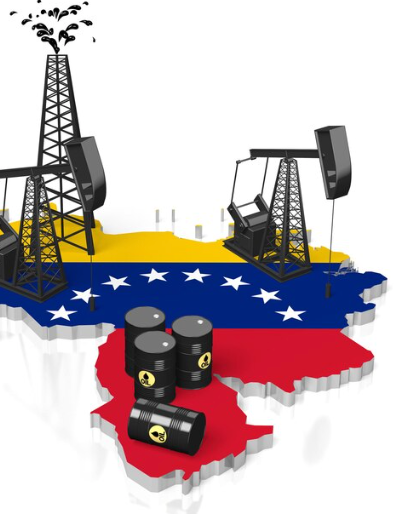
# $XOM $CVX #Venezuela #OilIndustry #EnergyMarkets #RegimeChange #USTensions #HeavyCrude #EconomicImpact #LatinAmerica #GlobalOil #OilProduction #MarketTrends
Will U.S. Tensions and a New Regime Turbocharge Venezuela’s Oil Fortunes?
Escalating tensions between the United States and Venezuela are poised to reshape the global oil landscape. As the world’s largest holder of crude resources, Venezuela’s news focuses heavily on the potential impacts of a regime change under President Nicolas Maduro. Such a shift could significantly alter oil production levels, U.S. access to Venezuela’s heavy crude, and America’s geopolitical influence across the Western Hemisphere.
The current political climate suggests that any change in leadership could be a catalyst for increased oil production. Venezuela possesses vast reserves of heavy crude, which are particularly suitable for U.S. Gulf Coast refineries. However, under Maduro’s regime, these resources remain largely untapped due to international sanctions and internal mismanagement.
The Stakes of Regime Change
Should the U.S. administration decide to pursue regime change actively, the implications for the oil market could be profound. A new government might reopen channels for foreign investment and expertise, which could revitalize the oil sector. Enhanced production capabilities could lead to increased exports, benefiting not only Venezuela but also stabilizing global oil prices that have been volatile in recent years.
Moreover, a regime change could bolster U.S. influence in Latin America, countering the rising presence of other global powers. This geopolitical shift could have significant ramifications for energy security and trade relations across the region. The alignment of Venezuelan oil production with U.S. energy needs might also lead to a new era of cooperation, positioning Venezuela as a key player in the global energy market.
Market Reactions and Projections
Market analysts are closely monitoring the situation, assessing how potential changes may impact stock prices of major oil companies and global energy investments. Companies like ExxonMobil and Chevron are particularly sensitive to developments in Venezuela, given their substantial interests in the region.
Investors should consider the broader implications of U.S. foreign policy on energy markets. If tensions escalate further, the volatility in oil prices could increase, impacting everything from consumer energy costs to inflation rates. Therefore, understanding these dynamics becomes essential for anyone involved in the financial markets.
Conclusion: An Uncertain Future for Venezuela’s Oil Sector
While the future of Venezuela’s oil industry remains uncertain, the potential for a regime shift brings both opportunities and risks. The interplay between U.S. foreign policy and Venezuelan resources will be critical to watch in the coming months. For those interested in the broader implications on global oil markets, staying informed through platforms that provide real-time updates will be crucial.
For more insights on stock market trends and energy investments, consider exploring our dedicated section on stocks. As the geopolitical landscape evolves, so too will the opportunities within the energy sector.
To stay updated on the crypto market, visit our crypto section for the latest trends and analysis.










Comments are closed.