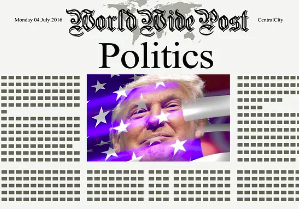
Trump’s Remarks Stir Political Waters
In a surprising declaration, former President Donald Trump has announced that the United States intends to play a significant role in selecting Iran’s next leader. This statement, reminiscent of U.S. involvement in Venezuela’s leadership transition, has sparked a flurry of political and market reactions. Trump, in an interview with Axios, expressed his desire to be involved in the appointment process, dismissing Mojtaba Khamenei, a potential successor, as unsuitable. Reuters confirmed these intentions, highlighting Trump’s skepticism towards Khamenei’s leadership capabilities.
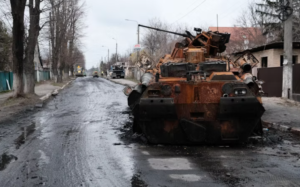
These comments come amidst an ongoing U.S.-Israeli military campaign against Iran, which many experts see as an attempt at regime change. The situation echoes the approach taken in Venezuela, where U.S. intervention played a crucial role in the leadership shift. The political landscape is tense, with the U.S. House of Representatives set to vote on a resolution regarding war powers, a move that will test the political support for the current military strategy.
Economic Fallout: Market Volatility and Energy Prices
The geopolitical tensions have had immediate repercussions on global markets. On March 5, 2026, the Dow Jones Industrial Average suffered a significant drop, losing approximately 1,000 points, or about 2.1%, as investors reacted to the escalating conflict. This decline marks one of the worst single-day losses for the index in recent months, reflecting growing investor anxiety.
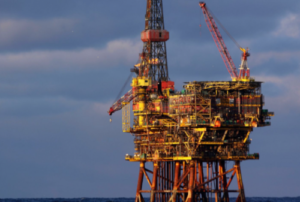
Energy markets have also been severely impacted. Brent crude prices surged by 4.7% to $85.22 per barrel, while U.S. crude saw an even steeper increase of 8.1%, reaching $80.67 per barrel. Some reports indicate that Brent prices briefly exceeded $120 per barrel due to disruptions in the Strait of Hormuz, a critical passage for global oil shipments.
In Europe, the Dutch TTF gas benchmark experienced a 50% increase since the onset of the conflict. U.S. gasoline prices have also risen sharply, with the national average hitting $3.25 per gallon, up 9% from the previous week’s average of $2.98 per gallon.
Expert Analysis and Future Implications
Financial strategists warn that the ongoing conflict and rising energy prices could pose significant risks to the global economic recovery. The situation bears similarities to past geopolitical shocks, underscoring the fragility of investor sentiment. Analysts caution that prolonged conflict could exacerbate stagflation risks, complicating efforts to control inflation.
Experts from Natixis and Oxford Economics have highlighted the potential long-term impacts on energy supplies, noting that the volume of LNG exports through the Strait of Hormuz far exceeds previous disruptions, such as the 2022 Russian gas crisis. A prolonged shutdown could have severe economic consequences, further destabilizing global markets.
Market observers emphasize the sensitivity of financial markets to geopolitical developments, drawing parallels to previous downturns triggered by similar events. The current volatility reflects a broader uncertainty, with investors seeking safe-haven assets amid the turmoil.
Summary and Outlook
As of March 5, 2026, Trump’s assertion of U.S. involvement in Iran’s leadership transition has intensified geopolitical tensions, with significant economic ramifications. The situation remains fluid, with the U.S. House’s war powers resolution vote serving as a critical indicator of domestic political support. While the immediate market impacts are significant, the long-term consequences of prolonged conflict could pose even greater challenges to global economic stability.
Looking ahead, investors and policymakers will need to navigate the complex interplay of geopolitical dynamics and economic pressures. The potential for further market disruptions remains high, underscoring the need for strategic planning and risk management in an increasingly uncertain global landscape.







Comments are closed.