Scaramucci Calls for Calm as Hawkish Iran Rhetoric Escalates
Former White House Communications Director Anthony Scaramucci has publicly criticized Senator Lindsey Graham for what he termed “unhinged” remarks advocating for military strikes against Iran. Scaramucci’s rebuke, which included a suggestion to “take a tranquilizer,” highlights growing concern that escalating political rhetoric could destabilize global markets and push the U.S. toward another Middle Eastern conflict. The exchange underscores a significant divide within political circles on foreign policy, occurring as former President Donald Trump and Israeli Prime Minister Benjamin Netanyahu are positioned as key decision-makers regarding potential hostilities.
The immediate context involves heightened tensions following attacks in the region, with U.S. and Israeli officials weighing responses. Scaramucci, a financier and founder of SkyBridge Capital, framed his criticism not just in political terms but as a warning against the economic and market volatility that often accompanies war talk. His intervention points to the tangible financial risks investors must consider when geopolitical flashpoints ignite.
Market Implications of Geopolitical Risk in the Middle East
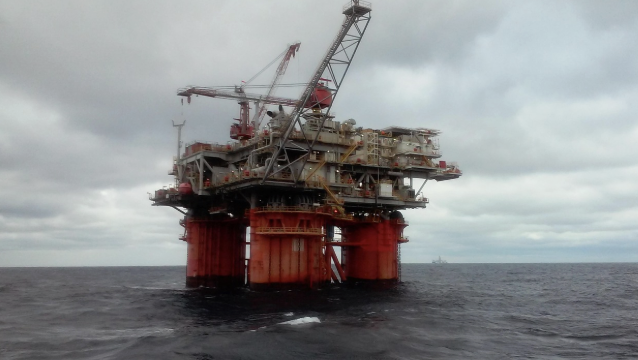
Historical patterns show that Middle East tensions reliably trigger volatility across key asset classes. The most direct impact is on oil prices. A significant escalation with Iran, which controls strategic shipping lanes like the Strait of Hormuz, could disrupt global crude supplies. During previous spikes in Iran-related tensions, Brent crude prices have surged by 10-15% over brief periods. This directly affects the United States Oil Fund ($USO) and shares of major oil producers.
Defense and aerospace stocks often see heightened activity as investors anticipate increased military spending and procurement. The SPDR S&P Aerospace & Defense ETF ($XAR) is a key benchmark for this sector. However, gains are typically tempered by broader market anxiety, as prolonged conflict fears can depress equity valuations by increasing uncertainty and potential input costs for businesses worldwide.
Broader Economic and Inflationary Pressures
Beyond oil, a sustained geopolitical crisis risks re-igniting inflationary pressures that central banks have struggled to contain. Higher energy costs filter through transportation, manufacturing, and consumer goods, complicating the Federal Reserve’s path toward interest rate cuts. This could lead to a “stagflation-lite” scenario of slower growth and persistent inflation, a worst-case outlook for both equity and bond markets.
Safe-haven assets, including the U.S. dollar, Treasury bonds, and gold, typically see inflows during such periods. The market’s reaction will depend heavily on the scale and perceived duration of any military engagement. A limited, symbolic strike may cause a short-lived spike in volatility, while a broader conflict could lead to a protracted risk-off environment, dragging down global indices.
The Political Calculus: Trump, Netanyahu, and Election-Year Dynamics
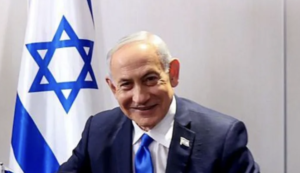
The source text identifies Trump and Netanyahu as central figures in the decision-making process. Both leaders face complex domestic political landscapes. For Netanyahu, a hardline stance on Iran has long been a cornerstone of his policy, but a major military action could have unpredictable consequences for regional stability and his own political standing.
For Trump, the calculus is intertwined with the 2024 presidential election. A foreign policy crisis could rally some parts of his base, but a protracted conflict or spike in gasoline prices could alienate voters focused on economic issues. Scaramucci’s comments, coming from a former insider who has been critical of Trump at times, reflect a worry that political posturing could override strategic and economic caution.
Uncertainty Over Policy and Intelligence
It remains unclear what specific intelligence or events prompted Senator Graham’s remarks. The U.S. intelligence community’s assessment of Iran’s activities and intentions is not publicly detailed in the source. This uncertainty itself is a market risk, as traders dislike unpredictable political drivers that are difficult to model. The lack of clear, public details forces investors to price in a wide range of potential outcomes.
Summary and Forward-Looking Analysis
Anthony Scaramucci’s public admonishment of Lindsey Graham highlights the dangerous intersection of geopolitical rhetoric and financial market stability. The immediate risks center on oil price volatility and defensive sector movements, with broader implications for inflation and global growth. The ultimate market direction hinges on decisions by Trump and Netanyahu, whose actions are difficult to forecast in an election year.
Investors should monitor the situation closely, maintaining balanced portfolios with hedges against oil shocks and volatility. The key takeaway is that bellicose political language is no longer just a cable news spectacle; it is a tangible input for market risk models. Prudent strategy involves preparing for short-term volatility while recognizing that the long-term economic damage of actual conflict would far outweigh any sector-specific gains.



Comments are closed.