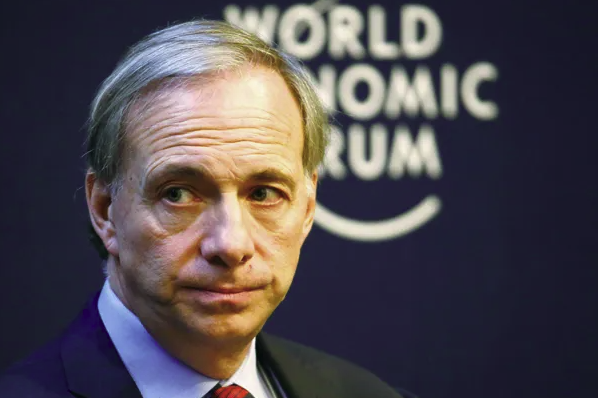
Ray Dalio’s Insights on Global Dynamics
Billionaire investor and founder of Bridgewater Associates, Ray Dalio, has made headlines with his assertion that the global order established post-World War II is in disarray. He suggests that we are entering what he terms ‘Stage 6’ of the ‘Big Cycle,’ a hypothesis he elaborates on in his recent discussions. This framework has sparked renewed interest in how geopolitical shifts might influence cryptocurrency markets.
Understanding Dalio’s ‘Big Cycle’
Dalio’s ‘Big Cycle’ theory posits that historical events tend to follow a recurring pattern, influenced heavily by economic and geopolitical factors. Stage 6, as defined by Dalio, typically indicates a period of turbulence and uncertainty, marked by rising conflict and fragmentation among nations. This environment raises questions about stability in financial markets, particularly for digital assets like Bitcoin (BTC) and Ethereum (ETH).
The Impact on Cryptocurrency Markets
The relationship between geopolitical instability and cryptocurrency is complex. On one hand, crises can drive individuals and institutions toward decentralized assets as safe havens. Conversely, volatility stemming from global unrest can also prompt sell-offs in cryptocurrencies, as seen during periods of heightened market anxiety.
Recently, Bitcoin’s price has shown resilience, trading around $27,000, while Ethereum hovers near $1,700. Analysts argue that a robust response to geopolitical tensions could see these figures rise, as investors seek refuge in hard assets. However, the uncertainty surrounding worldwide political dynamics suggests that these markets could also face significant risks.
Geopolitical Factors at Play
Dalio’s comments come amid an increasingly polarized global landscape. Tensions between the U.S. and China, coupled with ongoing conflicts in various regions, contribute to an atmosphere of unpredictability. This volatility can create both opportunities and challenges for investors in the cryptocurrency space.
For instance, during prior geopolitical crises, Bitcoin has occasionally demonstrated a counter-cyclical behavior, attracting investors seeking non-government-controlled assets. This trend could be further amplified in Dalio’s predicted Stage 6 scenario, where traditional financial systems may face increasing scrutiny and potential failures.
Market Sentiment and Investor Behavior
Market sentiment plays a crucial role in the performance of cryptocurrencies. As investors digest Dalio’s analysis, we could see shifts in trading volumes and asset allocations. Increased interest in Bitcoin and Ethereum could emerge if perceptions shift towards viewing these assets as a hedge against systemic risks.
Conversely, if geopolitical tensions escalate and result in economic downturns, investors might initially retreat to cash or gold, causing temporary price dips in the cryptocurrency markets. Historical data indicates that Bitcoin has often rebounded robustly from downturns, reinforcing its position as a long-term play.
Conclusion: Navigating Uncertain Waters
Dalio’s insights into the state of the world order serve as a crucial reminder of the interconnectedness of global events and financial markets. As we potentially enter a phase of heightened instability, the cryptocurrency sector may face both challenges and opportunities.
Investors should remain vigilant and consider how geopolitical dynamics could shape their strategies in the months ahead. The evolving landscape will require adaptability as the influence of traditional powers wanes and the role of decentralized finance continues to grow.
In summary, while Dalio’s warnings highlight significant risks, they also underscore the potential for cryptocurrencies to redefine value in times of crisis. Keeping a close watch on both geopolitical developments and market trends will be essential for navigating this new terrain.











Comments are closed.