
Strategic Reserves Fail to Dent Supply Anxiety
Brent crude oil futures retreated from the psychologically significant $100 per barrel mark on Wednesday, despite a major coordinated effort by the International Energy Agency (IEA) to calm markets. The IEA announced that its 32 member countries would collectively release 400 million barrels of oil from emergency reserves, one of the largest such releases in history. The move was a direct response to soaring prices and supply fears stemming from the ongoing conflict involving Iran, a major oil producer.
However, the market’s reaction was telling. Brent crude futures ($BZ=F) were last seen trading at $93.45, down 2.64% on the day, after having touched intraday highs near $96 earlier in the session. Similarly, West Texas Intermediate (WTI) crude futures ($CL=F) traded at $92.12, a decline of 2.86%. This price action indicates traders viewed the reserve release as a temporary salve rather than a solution to deeper structural supply concerns linked to geopolitical instability.
Market Data Reveals Underlying Volatility
The intraday price swings underscore the market’s nervousness. Brent futures opened the session around $95.98 before falling to current levels, demonstrating significant volatility. WTI followed a similar pattern, starting near $94.83. Both benchmarks remain substantially higher than their previous closes of $89.35 and $87.25, respectively, highlighting the sustained upward pressure from earlier in the week.
Analysts suggest the failure of the reserve announcement to sustainably lower prices points to a market pricing in a prolonged disruption. The release, while sizable, represents a drop in the bucket compared to global daily consumption, which exceeds 100 million barrels per day. The drawdown is also a one-off measure, leaving the fundamental question of lost Iranian barrels unanswered.
The Geopolitical Premium Persists
The core driver remains the risk that the conflict could lead to a significant, sustained reduction in Iranian oil exports or, in a worst-case scenario, disrupt shipments through the critical Strait of Hormuz. Iran is a major producer within OPEC, and any prolonged outage would strain global inventories that are already relatively tight. The market is effectively adding a “geopolitical risk premium” to the price, which temporary stockpile releases are ill-equipped to erase.
Furthermore, the IEA’s action consumes a portion of the global strategic petroleum reserve, a buffer meant for true supply emergencies. Some market participants may be concerned that using these reserves now reduces the world’s capacity to respond to an even more severe crisis later in the year.
Forward Curve and Trader Positioning
The structure of the oil futures market also provides clues. When prices for near-term delivery are higher than those for later dates (a condition known as backwardation), it signals immediate supply tightness. This structure has been pronounced recently, and the IEA’s release may only provide fleeting relief to this front-month pressure. Trader positioning reports in the coming days will reveal whether large speculators are viewing the dip as a buying opportunity.
The price retreat from the $100 level suggests that threshold acts as a strong technical and psychological resistance. However, support levels have also risen dramatically. The key question for traders is whether prices will consolidate at these elevated levels or if the reserve release, combined with potential diplomatic efforts, can foster a more meaningful correction.
Broader Economic Implications
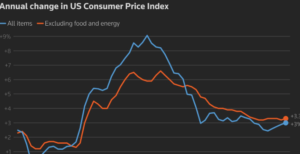
Sustained high oil prices act as a tax on global economic growth, fueling inflation and squeezing consumer spending. Central banks, already in a tightening cycle to combat inflation, face an even more complex challenge if energy costs remain high. Industries sensitive to fuel costs, such as airlines and shipping, will see margins compressed, potentially impacting equity markets broadly.
For consumers, the lag effect means gasoline and diesel prices are likely to remain elevated even with this intervention. The effectiveness of the IEA’s move will ultimately be judged not by a single day’s price move, but by its ability to prevent prices from spiraling higher over the coming weeks and months.
Summary and Outlook
Oil prices pulled back from the $100 threshold after the IEA’s coordinated release of 400 million barrels from strategic reserves. However, the decline was modest, with Brent and WTI still holding above $92, indicating the move failed to alleviate deep-seated fears over supply disruptions from the Iran conflict. The market’s focus remains firmly on geopolitical risk rather than temporary inventory injections.
The path forward for crude is inextricably linked to developments in the Middle East. Any escalation could quickly send prices back toward triple digits, while a de-escalation could trigger a sharper correction. In the near term, volatility is expected to remain high as traders weigh the finite nature of reserve releases against the uncertain duration of geopolitical supply risks.









Comments are closed.