
Crude Oil Surges Amid Market Uncertainty
Oil futures rallied sharply on Wednesday, with the front-month contract for West Texas Intermediate crude oil for April 2026 delivery climbing to $85.81 per barrel. This represents a significant intraday gain of approximately 3.3% from the session’s opening price of $83.08. The move higher comes as traders continue to monitor a complex geopolitical landscape, with particular attention on ongoing tensions in the Middle East.
The market’s upward momentum underscores the persistent sensitivity of energy prices to global security developments. Despite the day’s gains, prices remain within a volatile range established over recent weeks, reflecting the competing narratives of supply risks and potential strategic reserve releases.
Market Data Points to Volatile Session
According to verified market data from Yahoo Finance, the benchmark crude oil futures contract (CL=F) traded on the New York Mercantile Exchange (NYM) saw its regular market price settle at $85.81. This marked a notable increase from the previous closing price of $83.45. The instrument, formally named “Crude Oil Apr 26,” is a key gauge for global oil prices and energy sector sentiment.
The intraday trading range was substantial, with the price advancing steadily through the session. The 3.286% change from the day’s start highlights the active repricing of risk by market participants. Trading volume data for the latest snapshot was not available, which can sometimes occur in futures markets during specific reporting intervals.
Geopolitical Context and Price Drivers
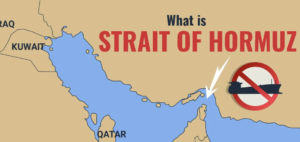
The primary catalyst cited for the day’s price action is the simmering geopolitical tension, specifically referencing developments related to U.S.-Iran relations. While the exact nature of Wednesday’s developments is unclear from the source, historical patterns show that any escalation or perceived threat to supply from the Strait of Hormuz—a critical chokepoint for global oil shipments—can trigger immediate buying.
This price move occurs against a backdrop where traders are also anticipating potential action from consuming nations. The source text mentions a “possible historic reserve release,” likely referring to a coordinated drawdown from strategic petroleum reserves (SPRs) by the United States and its allies. Such releases are used as a tool to calm markets and suppress prices by increasing immediate supply.
The Strategic Reserve Wildcard
The prospect of a large-scale reserve release creates a fundamental tension in the market. On one hand, geopolitical risks are inherently bullish, threatening to disrupt physical supply chains. On the other, the potential for a massive, coordinated injection of barrels from government stockpiles is a bearish counterweight. This leaves traders in a state of heightened alert, parsing every official statement for clues on policy direction.
The size and timing of any potential release remain uncertain. In the past, the International Energy Agency (IEA) has coordinated releases among its member countries during significant supply disruptions. The market’s positive price move on Wednesday suggests traders are currently assigning greater weight to the immediate geopolitical risk than to the potential future supply from reserves.
Broader Market Implications
Sustained oil prices above $85 per barrel have wide-ranging implications for the global economy. Higher energy costs act as a tax on consumers and increase input costs for industries, potentially fueling broader inflationary pressures. This complicates the task of central banks, like the Federal Reserve, which are focused on stabilizing prices.
For equity markets, the impact is mixed. The energy sector, represented by ETFs like the Energy Select Sector SPDR Fund (XLE) and companies such as Exxon Mobil (XOM) and Chevron (CVX), typically benefits from higher commodity prices. Conversely, sectors with high fuel costs, like airlines, transportation, and certain manufacturing, face margin compression.
Technical and Fundamental Outlook
From a technical perspective, a close above $85 represents a breach of a psychologically significant level and could invite further buying if momentum is sustained. The next key resistance levels would likely be found around the $87 and $90 marks. Support, should the geopolitical premium fade, sits near the previous close in the low $83s and the day’s low near $83.
Fundamentally, the market balance remains tight. Global oil inventories have been drawn down significantly from prior years, leaving less of a buffer to absorb unexpected supply shocks. This underlying tightness amplifies the price impact of any perceived threat to production or transportation.
Summary and Forward Look
Oil prices advanced sharply on Wednesday, with WTI crude rising over 3% to $85.81 per barrel. The move was driven by renewed focus on geopolitical risks in the Middle East, even as traders weigh the possibility of a major release from global strategic petroleum reserves. The market is caught between immediate supply fears and potential future government intervention.
Looking ahead, price direction will hinge on the evolution of the geopolitical situation and any official announcements regarding stockpile releases. In the near term, volatility is likely to remain elevated as traders navigate these conflicting signals. The market’s ability to hold above the $85 level will be a key test of bullish conviction in the sessions to come.









Comments are closed.