Iranian Crude Shipments Defy Regional Conflict, Reach Chinese Ports
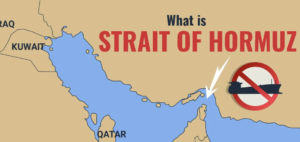
Despite escalating military tensions and attacks in the Red Sea and Strait of Hormuz, Iran has maintained a steady flow of crude oil shipments to China, according to shipping data and trade reports. This persistent trade underscores the complex realities of global energy logistics, where geopolitical conflict creates broad market volatility but specific, established trade corridors can prove resilient. The shipments transit the Strait of Hormuz, a chokepoint where U.S.-Iran tensions have periodically flared, yet they appear to continue amid a wider regional conflict involving Israel and Hamas.
Analysts note that while insurance premiums and shipping costs have soared for many routes, the Iran-China oil trade operates under a different set of economic and political parameters. China is Iran’s largest oil customer, and the two nations have deepened economic ties in recent years, often conducting trade in currencies other than the U.S. dollar. This relationship provides a buffer against Western sanctions and regional instability, allowing a baseline of trade to continue even as other shipping lanes face significant disruption.
Market Impact: Brent Volatility and Supply Chain Fears
The broader conflict has injected sustained volatility into global oil benchmarks. Brent crude futures ($BCO) have experienced sharp swings, frequently trading in a range between $82 and $90 per barrel over recent months as traders weigh the risk of a major supply disruption against actual shipment data. The price at times has spiked on news of attacks near the strait or in the Red Sea, only to retreat when concrete evidence of a sustained supply outage fails to materialize.
This volatility reflects a market on edge. The Strait of Hormuz is arguably the world’s most critical oil transit channel, with about one-fifth of global oil consumption passing through it. Any credible threat of its closure sends shockwaves through energy markets. However, the continued flow of Iranian oil to a major buyer demonstrates that not all flows are equally impacted. The market is currently differentiating between generalized risk and specific, observable trade data.
Sanctions and the Shadow Fleet
A key enabler of this trade is Iran’s so-called “shadow fleet” of tankers—older vessels that operate with opaque ownership and insurance, specifically to circumvent U.S. and European sanctions. This fleet allows Iran to export oil despite financial restrictions. Shipping analytics firms have tracked a consistent number of these vessels loading Iranian crude and discharging in Chinese ports, particularly in Shandong province.
The existence and operation of this parallel shipping network mean that traditional levers of state pressure, like sanctions, have a diminished effect on physically halting this specific oil flow. It creates a segmented market: while publicly traded oil majors and many national companies avoid Iranian cargoes due to sanctions risk, a network of independent Chinese refiners and traders continues to purchase them, often at a significant discount to benchmark prices.
Strategic Implications for Global Energy Security
The ongoing Iran-China oil trade amidst conflict carries significant strategic implications. It highlights a gradual decoupling of a portion of global energy trade from Western-led financial and security systems. The trade reinforces a bilateral axis that is less susceptible to Western political pressure, potentially altering long-term energy alliances and security calculations.
For the United States and its allies, the situation presents a dilemma. Aggressive enforcement actions to halt the shipments could trigger a direct confrontation and further spike oil prices globally. Inaction, however, allows Iran to sustain critical revenue and China to secure discounted energy, undermining the intended economic pressure of sanctions. This balancing act is a central feature of the current geopolitical landscape in the Middle East.
Forward Outlook for Oil Markets
Looking ahead, energy analysts suggest the market will remain hypersensitive to any sign that the conflict is physically constraining traffic through the Strait of Hormuz itself, rather than just raising costs. The key metric will be total volumes transiting the strait, not just the continuation of specific sanctioned trades. A measurable drop in those total volumes would likely trigger a more sustained price rally than the current risk-premium-driven volatility.
Furthermore, the resilience of the Iran-China route suggests that even in a scenario of heightened conflict, some oil will find a way to market through alternative financial and logistical channels. This could place a ceiling on potential price spikes, as traders factor in the adaptability of certain segments of the global oil trade.
Summary and Takeaway
Iran’s continued oil exports to China via the Strait of Hormuz demonstrate the limited immediate impact of regional conflict on deeply entrenched, sanctions-insulated trade relationships. While the war has disrupted broader shipping and elevated global oil price volatility, specific corridors endure. The market’s focus is shifting from generalized fear to analyzing hard shipment data and the resilience of alternative shipping networks.
The key takeaway for investors is that energy market risk remains elevated but nuanced. The price of benchmarks like Brent crude will continue to reflect a high geopolitical risk premium, but the actual physical supply picture may be more robust than headlines suggest, thanks to flows like those from Iran to China. Monitoring vessel tracking data will be as crucial as following diplomatic statements in the months ahead.









Comments are closed.