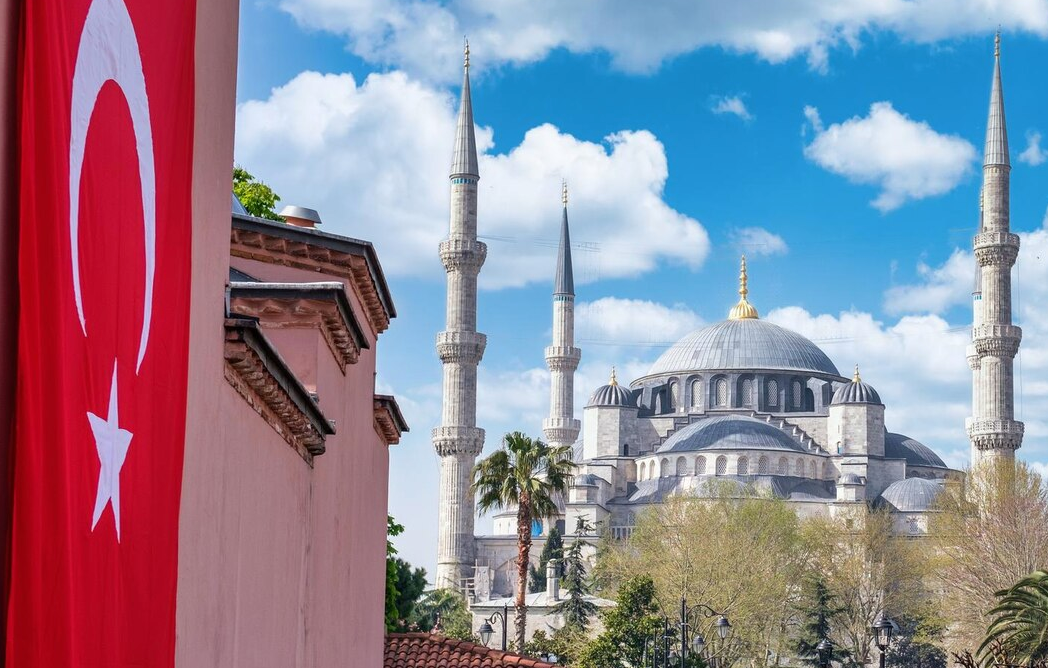
Iran Firmly Denies Missile Launch Allegations
In a recent development, Iran has categorically denied accusations of launching a missile towards Turkey. This statement, issued by the Iranian Armed Forces and broadcasted through state media, emphasized Iran’s respect for Turkey’s sovereignty. The denial came in response to claims from Turkey’s Ministry of National Defence, which stated that a ballistic missile from Iran was intercepted over the eastern Mediterranean. Despite these allegations, no casualties were reported.
Turkey and NATO’s Response
Turkey’s Ministry of National Defence reported that the missile, allegedly launched from Iran, traveled through Iraqi and Syrian airspace before being neutralized by NATO’s air and missile defense systems. President Recep Tayyip Erdoğan assured the Turkish public that all necessary precautions are being taken to avoid future incidents. Additionally, Turkey’s Foreign Minister Hakan Fidan lodged a formal protest with his Iranian counterpart, highlighting the seriousness of the situation.
Market Reactions and Economic Impact
The geopolitical tensions have had a noticeable impact on global markets. Oil prices surged, with Brent crude climbing approximately 7–10%, reaching around $80–82 per barrel. This increase is attributed to fears of potential disruptions through the Strait of Hormuz. Meanwhile, global equity markets experienced uneven reactions. European indices, such as the CAC 40 and DAX 30, saw declines, while U.S. markets showed modest recoveries, with the Nasdaq up 0.36% and the S&P 500 up 0.04%.
In Turkey, economic measures have been implemented to stabilize the financial markets. The Central Bank of the Republic of Turkey (TCMB) introduced emergency actions, including a ban on short-selling on the Borsa Istanbul and the suspension of 1-week repo auctions. The bank also launched lira-settled forward FX sales to mitigate market volatility.
Expert Opinions and Future Outlook
Experts have weighed in on the potential implications of these developments. Joseph Brusuelas, Chief Economist at RSM US, noted that while oil price fluctuations are common during Middle East tensions, such spikes are typically temporary. Prashant Newnaha of TD Securities described Europe’s market downturn as relatively muted, suggesting that the conflict may not have a long-lasting impact.
Analysts have warned that if oil prices exceed $100 per barrel, it could pose a challenge to global economic stability. In Turkey, Finance Minister has raised concerns about inflation shocks, prompting discussions on the possible reinstatement of fuel tax buffer mechanisms to counteract rising costs.
Summary and Forward-Looking Takeaway
As tensions between Iran and Turkey escalate, the situation remains fluid, with both nations standing firm on their respective positions. The global markets are reacting cautiously, with particular attention on oil prices and regional stability. While historical patterns suggest that market disruptions may be temporary, the ongoing geopolitical uncertainty continues to pose risks. Stakeholders are advised to monitor developments closely as the situation unfolds.





Comments are closed.