
Strategic Reserves Insufficient to Plug Supply Gap
Goldman Sachs analysts have issued a stark warning that a coordinated emergency release of 400 million barrels from International Energy Agency (IEA) member countries will be insufficient to address a deepening global oil supply crisis. The bank contends that strategic petroleum reserves alone cannot paper over a supply shortfall estimated at 10 million barrels per day, a figure that underscores the severity of the current market dislocation. This assessment arrives as crude oil futures surged, with front-month contracts trading sharply higher.
The price action reflects the market’s skepticism. West Texas Intermediate (WTI) crude for April 2026 delivery ($CL=F) was last trading at $85.10, a significant gain of nearly 2% from the previous close of $83.45. The intraday move from a low near $83.08 highlights the volatile and bullish sentiment gripping the energy complex. The market appears to be pricing in a persistent deficit, dismissing the potential impact of the announced stockpile release.
Market Mechanics Versus Political Tools
The core of Goldman’s argument hinges on the scale of the problem versus the tool being deployed. A release of 400 million barrels, while historically large, represents a finite stockpile that would need to be replenished. In contrast, a daily supply loss of 10 million barrels is a continuous flow disruption. The mathematics are simple: the entire announced reserve would be exhausted in just 40 days if used to fully offset the missing daily supply, an unsustainable strategy for any prolonged crisis.
Strategic petroleum reserves are designed as a buffer for temporary logistical or geopolitical shocks, not as a permanent substitute for lost production capacity. Using them at such a scale risks depleting a critical safety net without resolving the underlying supply issue. Analysts suggest the move may provide a short-term psychological cushion and potentially cap extreme price spikes, but it does not address the fundamental supply-demand imbalance driving prices.
Goldman’s Stance and Market Context
The warning from Goldman Sachs ($GS) carries significant weight given the firm’s prominence in commodity research and trading. The bank’s shares were trading slightly lower at $822.88, underperforming the broader market movement on the day this analysis was circulated. The firm’s assessment suggests that without a resolution to the physical supply disruption, oil prices are likely to remain elevated and volatile, with the reserve release acting only as a temporary speed bump.
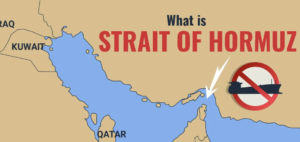
The nature of the supply loss, hinted at by references to a “Hormuz crisis,” points to potential disruptions in the Strait of Hormuz, a critical chokepoint through which about 20% of the world’s oil passes. Any significant interruption there has immediate and severe consequences for global oil logistics. This geographic specificity explains the magnitude of the 10-million-barrel-per-day estimate, as alternative shipping routes are vastly longer, more expensive, and capacity-constrained.
Implications for Investors and Policy
For investors, the analysis reinforces the need to look beyond headline-grabbing government interventions. The energy market is responding to a tangible physical shortage, not merely financial speculation. The price strength in crude futures, even amid news of a massive reserve release, is a powerful signal that the market views the fundamental picture as overwhelmingly tight.
This environment benefits oil producers and certain segments of the energy sector but poses a severe challenge for central banks battling inflation and for governments facing rising energy costs for consumers and industry. The limited efficacy of strategic reserves shifts focus back to diplomatic efforts to secure the vital shipping lane and to longer-term energy policy choices regarding diversification and transition.
Forward Outlook and Summary
In summary, Goldman Sachs has delivered a sobering critique of the planned IEA oil stockpile release, framing it as an inadequate response to a massive supply shock. While the 400-million-barrel infusion may apply temporary downward pressure on prices, the bank’s analysis suggests it is structurally incapable of solving a deficit of 10 million barrels per day. The market’s bullish price action, with WTI crude holding above $85, validates this view.
The takeaway is clear: strategic reserves are a tactical tool, not a strategic solution. Until the physical flow of oil is restored, the market will likely continue to trade on a deficit basis. Investors should monitor developments in the key geopolitical flashpoint and prepare for sustained volatility and elevated price levels in the oil market, as financial interventions cannot compensate for missing physical barrels.










Comments are closed.