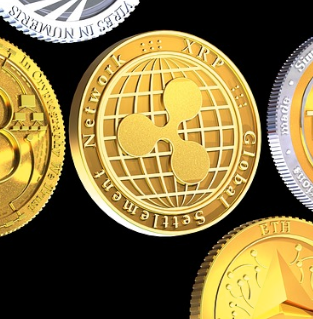
$XRP $BTC
#Crypto #XRP #Blockchain #Investing #Finance #Trading #InstitutionalInvesting
Could XRP Ever Hit $100? Here’s Why Experts Call It a Fantasy
In the ever-evolving world of cryptocurrency, the news surrounding XRP has sparked excitement and debate. Recently, analysts have been reevaluating the narrative surrounding XRP, particularly focusing on the distinction between utility and speculation. Many argue that the recent influx of institutional developments does not necessarily validate projections of XRP reaching $100.
While acknowledging positive macroeconomic and regulatory trends, experts caution that market euphoria often outpaces fundamental realities. This sentiment was echoed by a leading analyst who emphasized the importance of disciplined profit-taking if XRP approaches what he believes to be its plausible price range for this cycle. “Don’t fall into the trap of thinking that an upward surge means XRP will immediately hit $100 or $200,” he advised. He further indicated that should XRP reach double digits, he plans to withdraw a substantial portion—potentially 80%—of his holdings.
Massive Tailwinds for XRP
The analyst pointed to significant macroeconomic factors, such as the Federal Reserve’s recent 25-basis-point rate cut and Chair Jerome Powell’s indication of possible further easing. Initially, risk assets reacted unpredictably to the announcement, but markets are now factoring in the likelihood of additional rate cuts through the end of the year. Although the analyst described the Fed’s decision as “pretty much a nothing burger” on its own, it has sharpened the focus on specific micro-drivers within the crypto market—namely, capital flows and policy changes.
On the regulatory front, a major pivot has occurred with the SEC’s approval of generic listing standards for spot commodity exchange-traded products (ETPs) across major exchanges. This development streamlines the path for crypto ETPs, extending beyond Bitcoin and Ethereum. Additionally, the SEC has greenlit Grayscale’s Digital Large Cap product, which includes Bitcoin, Ethereum, XRP, Solana, and Cardano, marking a new era for regulated cryptocurrency assets.
Moreover, the analyst highlighted the expansion of derivatives infrastructure, as CME Group announced its intention to list options on Solana and XRP futures. This move extends regulated hedging opportunities beyond the Bitcoin/Ethereum duopoly and potentially attracts new institutional players into the market.
Ripple’s Institutional Initiative: A Game Changer?
Perhaps the most significant development came from Ripple, DBS, and Franklin Templeton, which unveiled an innovative plan that allows accredited and institutional clients to switch between Ripple’s dollar stablecoin (RLUSD) and Franklin Templeton’s tokenized money-market fund (sgBENJI) on the DBS Digital Exchange. The bank is even exploring using sgBENJI as repo collateral, with Ripple’s stablecoin serving as transactional fluidity. Franklin Templeton will issue the sgBENJI token on the XRP Ledger, creating a credible on-chain cash-and-collateral market and establishing a regulated venue for RLUSD’s utility.
The potential implications are vast, as RLUSD executive Jack McDonald estimated that “repo transaction volume is well into the tens of trillions globally,” expected to reach nearly $12 trillion in the U.S. alone by 2024. While the analyst does not claim that all flow will migrate to the XRP Ledger, he suggests this development could represent a substantial ceiling for tokenized collateral markets, provided that custody, compliance, and counterparty frameworks mature.
Why XRP Won’t Reach $100 This Cycle
Turning to technical analysis, the analyst provided insights that serve more as risk-management considerations rather than direct price predictions. He noted recent weaknesses in Bitcoin dominance as an indicator of an early-stage altcoin rotation, while also acknowledging that short-term market structures remain volatile.
Citing the potential for XRP to catch up to capital flows, he referenced BNB’s recent push toward a 1.618 Fibonacci extension, contrasting it with XRP’s current position below comparable levels. He reiterated that speculation often drives prices higher than utility in the early stages, cautioning traders not to equate institutional news with a settled valuation model for foundational settlement tokens.
Ultimately, the analyst’s outlook remains conservative compared to social-media-driven price targets. He maintains his belief in the eventual emergence of utility for XRP, particularly as U.S. market structures evolve and institutional frameworks proliferate, including ETFs, CME derivatives, and tokenized cash and collateral.
However, he continues to uphold his long-standing thesis that the $12 region will mark the cycle’s peak for XRP. Without a widely accepted framework to price “base utility” for throughput, he intends to take profits as XRP approaches his target range, keeping a 10% “moon bag” for potential future growth while reassessing the situation as needed. The psychological discipline in trading, he argues, is as critical as the mathematical calculations: “If you were afraid of losing $1,000 and it’s now worth $20,000, you should be 20 times more afraid of losing $20,000.”
At the time of reporting, XRP was trading at $3.03. For more insights into cryptocurrency trends, check out our crypto section. If you’re looking to trade, consider exploring options on Binance.







Comments are closed.